A practical AI plan built around how your team works.
Identify useful workflows, document the knowledge they depend on, and give your people clear rules for using and checking AI. Start with a scoped assessment; add training or ongoing governance where it helps.
Book a 30-minute consultHow it worksFirms that want AI used well — and someone accountable for it
Firms where the knowledge that matters is field judgment, review habits, and twenty years of "how we do it here" — exactly what a careless AI rollout tends to flatten. The first question is usually what to improve and how to start.
Owners and leadership teams who want the guardrails in place and one person responsible for them, without hiring a full-time role to get there. The first question is usually who owns the risk.
Start with a scoped assessment
Every engagement begins with a written assessment of your actual workflows. Training and governance are added where they help, one phase at a time.
Readiness assessment
A working session with the people who own the workflows, then a written assessment covering:
- Selected workflows, and where their knowledge actually lives
- Knowledge gaps and data constraints
- Candidate pilots, each with an owner
- The human review point that makes each pilot safe to try
- A prioritized next step
Training & enablement
Role-based sessions for the people doing the work: what the tools are good at, where they fail, how to check the output, and how to disclose use. Built around your workflows and your data rules, not a generic slide deck.
AI committee & governance
Charter, membership, decision rights, meeting cadence, and the policies a committee actually needs: acceptable use, data handling, vendor review, disclosure. Then ongoing facilitation so the committee makes decisions instead of collecting them. Useful once there is something to govern — not a prerequisite for starting.
Fit call first. Then the work, one phase at a time.
Fit call — 30 minutes, free
The consult you book on this site. We talk through where AI is already showing up in your company, what's worrying leadership, and whether an assessment makes sense. No deliverable, no pitch.
Working session & written assessment
A scoped, paid engagement: a working session with the people who own the workflows and the risk, then the written assessment above — what to capture, what to pilot, what to leave alone, and what to decide first. Build/buy-neutral, and written so it can be checked later.
Training and standing support, where they help
Role-based training blocks as teams come online, committee facilitation on a set cadence, and a second opinion when a vendor pitch needs one. Each is scoped separately.
A map, not a memo
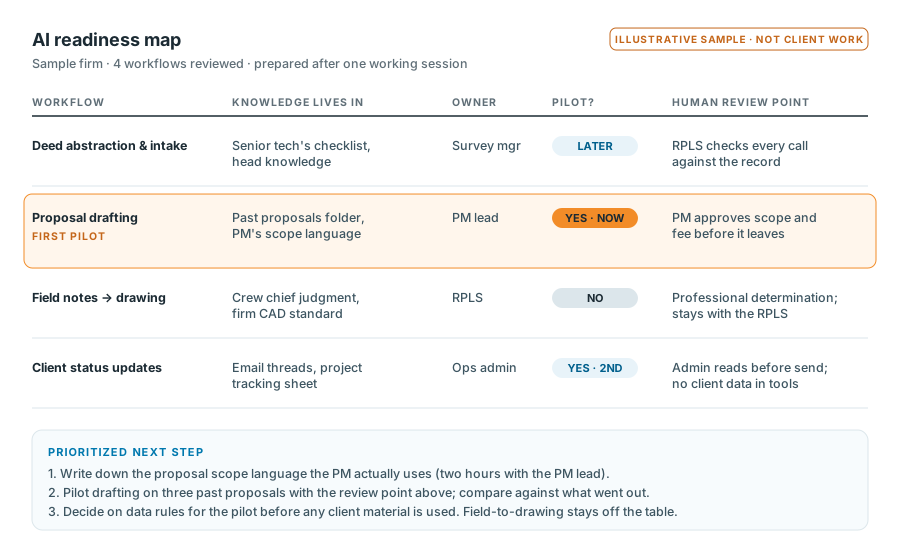
A readiness map from a sample assessment
Four workflows, where their knowledge lives, who owns them, whether each is a pilot candidate, and the human review point that makes it safe to try. One becomes the first pilot; one stays off the table because it's a professional determination.
Illustrative sample for a fictional firm. Not client work.
Questions that come up on the fit call
Do we need an AI committee to start?
No. Most firms start with the assessment and one small pilot. A committee is worth forming once there are decisions to make on a regular basis — I'll say so when that point arrives, and not before.
Do you work with the tools we already have?
Yes. The assessment starts from your existing systems and the tools people are already using. Recommendations are build/buy-neutral.
Who from our team needs to be involved?
For the assessment, the people who actually own the workflows and the risk — usually a project or survey manager, a senior technician, and whoever answers for data handling. A few hours each, not weeks.
How do we know adoption is working?
Each pilot is written up with a baseline, a review point, and what "better" would look like before it starts. Adoption is evaluated against that, not against a vendor's claims.
Do you sell software?
No. Recommendations start with your needs and existing systems. If a custom tool turns out to be the right answer, it is scoped separately under App Development — never assumed.
Start with the conversation.
In 30 minutes we'll cover where AI is already showing up in your company, what's keeping leadership up at night, and whether an assessment is the right next step.
Book a consult